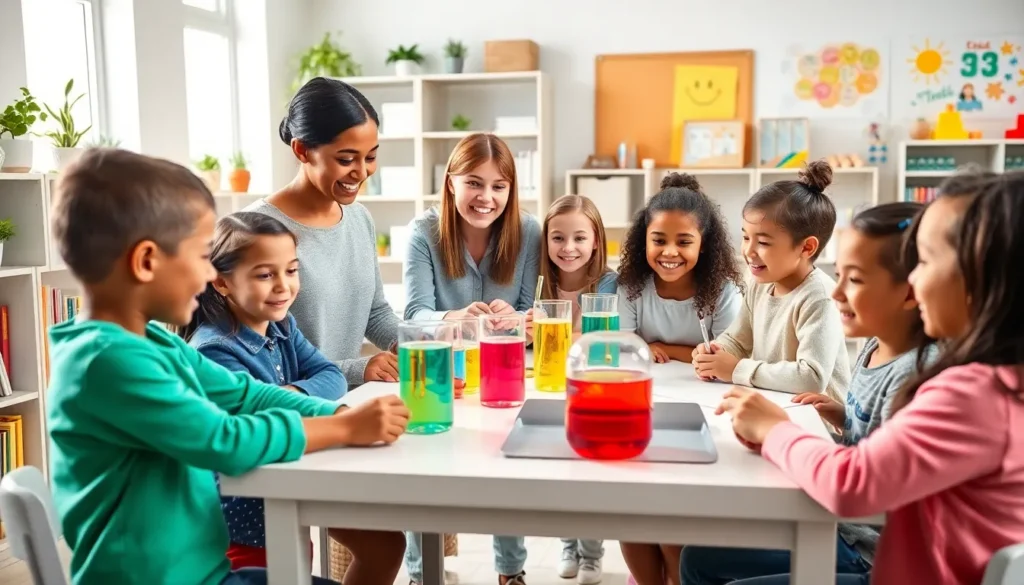

Elementary years ideas shape how children learn, play, and grow during one of the most formative periods of their lives. Kids between ages five and eleven absorb information like sponges. They build foundational skills that stick with them forever. The right activities can turn ordinary afternoons into memorable learning experiences.
Parents and teachers often search for fresh ways to keep young learners engaged. The good news? Elementary years ideas don’t require expensive materials or complicated planning. Simple projects spark curiosity. Physical games build coordination. Creative activities develop problem-solving skills. This guide covers practical, fun activities that work both at home and in the classroom.
Table of Contents
ToggleKey Takeaways
- Elementary years ideas don’t require expensive materials—simple hands-on projects like science experiments and arts and crafts spark curiosity and build lasting skills.
- Physical activities such as nature scavenger hunts, obstacle courses, and gardening improve focus, coordination, and brain development in young learners.
- Role-playing games, board games, and community service projects help children develop essential social and emotional skills during elementary years.
- Creative activities like building with recycled materials and origami promote problem-solving, fine motor skills, and spatial thinking.
- Reading and writing enrichment through book clubs, comic strips, and word games builds strong literacy foundations while keeping kids engaged.
- The best elementary years ideas blend fun with learning, turning ordinary afternoons into memorable educational experiences at home or school.
Creative Learning Activities for Home and School
Creative learning activities give children space to explore ideas through action. They learn best when they can touch, build, and create. Elementary years ideas centered on creativity help kids retain information longer than passive learning methods.
Hands-On Science Experiments
Science experiments bring abstract concepts to life. Children understand cause and effect better when they see reactions happen in front of them.
Try the classic baking soda volcano. Mix baking soda, dish soap, and food coloring in a container. Add vinegar and watch the eruption. Kids learn about chemical reactions while having a blast.
Grow crystals using sugar or salt solutions. This experiment teaches patience and observation. Children check their crystals daily and record changes in a journal.
Build a simple circuit with batteries, wires, and a small bulb. Elementary students grasp basic electricity concepts through this hands-on project. They see how energy flows and understand why switches work.
Plant seeds in clear containers so kids can watch roots grow. This activity connects children to biology and teaches responsibility. They water their plants and track growth over weeks.
Arts and Crafts Projects
Arts and crafts develop fine motor skills and encourage self-expression. These elementary years ideas work well for different skill levels.
Create collages using old magazines, newspapers, and fabric scraps. Children practice cutting, sorting, and arranging. They make decisions about color, texture, and composition.
Build structures with recycled materials. Cardboard boxes, paper tubes, and plastic containers become castles, robots, or vehicles. This activity promotes problem-solving and spatial thinking.
Try simple origami projects. Paper folding improves hand-eye coordination and teaches children to follow sequential instructions. Start with basic shapes like boats and airplanes before moving to animals.
Paint with unusual tools. Sponges, cotton balls, and even vegetables create interesting textures. Kids experiment with different techniques and discover new ways to make art.
Building Social and Emotional Skills
Elementary years ideas should include activities that build emotional intelligence. Children at this age learn how to manage feelings, work with others, and resolve conflicts.
Role-playing games help kids practice social situations. Set up scenarios like sharing toys, asking to join a game, or handling disappointment. Children rehearse responses in a safe environment.
Board games teach turn-taking, winning gracefully, and losing with dignity. Cooperative games work especially well. Players work together toward a common goal instead of competing against each other.
Create a feelings chart with pictures of different emotions. Children identify their feelings each day. This simple practice builds emotional vocabulary and self-awareness.
Pair older elementary students with younger buddies. Reading partnerships or craft projects give older kids leadership experience. Younger children benefit from extra attention and mentorship.
Community service projects teach empathy and gratitude. Children can make cards for seniors, collect food for local shelters, or clean up a neighborhood park. These activities show kids how their actions affect others.
Journaling helps children process emotions privately. Provide prompts like “Today I felt proud when…” or “Something that worried me was…” Writing about feelings helps kids understand themselves better.
Outdoor Play and Physical Activities
Physical activity supports brain development and overall health. Elementary years ideas that get kids moving improve focus and reduce behavioral problems in classrooms.
Nature scavenger hunts combine exercise with observation skills. Create lists of items to find: a smooth rock, something red, a feather, three different leaves. Kids explore their environment while staying active.
Obstacle courses build coordination and strength. Use playground equipment, hula hoops, cones, and jump ropes. Time each child and let them try to beat their own records.
Gardening connects children to nature and food sources. They dig, plant, water, and weed. Elementary students learn patience as they wait for vegetables or flowers to grow.
Organize relay races with educational twists. Children might solve a math problem at each station or identify a sight word before running to the next spot. These activities blend physical movement with academic practice.
Bird watching introduces kids to local wildlife. Provide simple field guides and binoculars. Children learn to sit quietly, observe carefully, and record what they see.
Simple sports like kickball, capture the flag, and four square teach teamwork and fair play. These games require minimal equipment and work well for groups of different sizes.
Reading and Writing Enrichment Ideas
Literacy skills form the foundation of academic success. Elementary years ideas focused on reading and writing prepare children for higher-level learning.
Start a book club for elementary students. Children read the same book and discuss it together. They learn to form opinions, support arguments with evidence, and listen to different perspectives.
Create comic strips or graphic novels. Kids who struggle with traditional writing often excel at visual storytelling. They practice sequencing, dialogue, and plot development.
Write letters to real recipients. Pen pals, grandparents, or local officials give children authentic audiences. They see that writing has purpose beyond classroom assignments.
Build a classroom or home library with diverse books. Include fiction, nonfiction, poetry, and graphic novels. Let children choose what interests them. Choice increases reading motivation.
Record audio stories. Children write scripts and perform them with sound effects. This activity improves fluency and expression. Kids love hearing themselves read.
Play word games like Scrabble Junior, Boggle, or Bananagrams. These games build vocabulary and spelling skills through fun competition. Children don’t realize they’re learning.