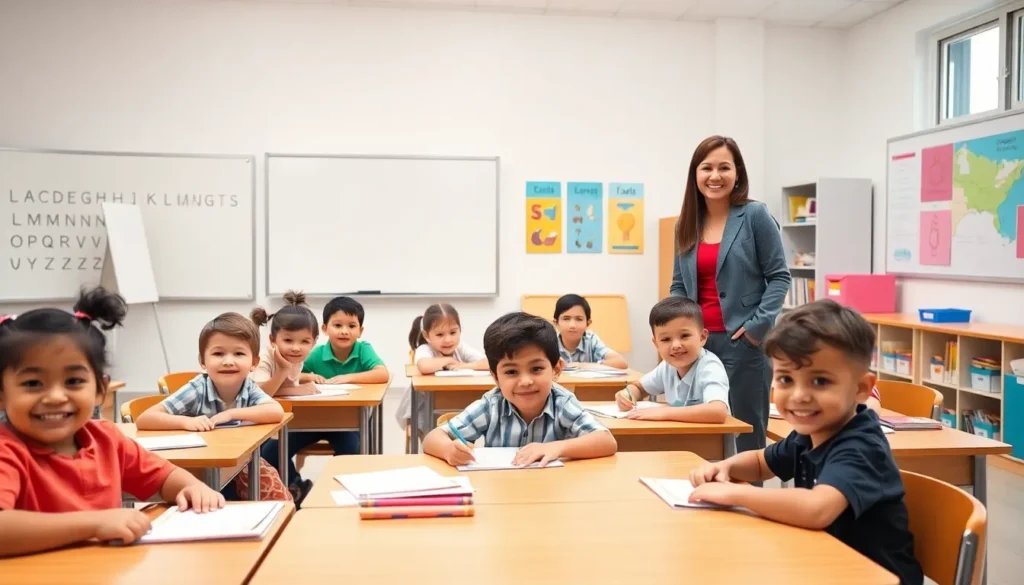

The elementary years for beginners mark a critical stage in a child’s educational journey. Children between ages five and eleven develop foundational skills that shape their academic future. Parents often feel uncertain about what to expect during these formative years.
This guide breaks down the elementary school experience into clear, actionable insights. It covers developmental milestones, academic foundations, and practical ways parents can support their children. Whether a child is entering kindergarten or transitioning through second grade, understanding the elementary years helps families prepare for success.
Table of Contents
ToggleKey Takeaways
- The elementary years for beginners span ages five to eleven and build foundational skills in literacy, numeracy, and social-emotional development.
- Primary grades (K-2) focus on learning to read and write, while intermediate grades (3-5) shift toward reading to learn and applying math concepts.
- Children reach key physical, cognitive, and emotional milestones during elementary school, including improved motor skills, abstract reasoning, and emotional regulation.
- Parents can support their child’s success by establishing consistent routines, reading together daily, and maintaining open communication with teachers.
- Early intervention is critical if children struggle with reading, math anxiety, or social challenges during the elementary years for beginners.
- Encouraging a growth mindset—praising effort over ability—helps children view academic challenges as opportunities rather than failures.
What Are the Elementary Years?
The elementary years span from kindergarten through fifth or sixth grade, depending on the school district. Most children begin this phase around age five and complete it by age eleven or twelve. These years form the bridge between early childhood and middle school.
During the elementary years, students learn in structured classroom settings for the first time. They follow schedules, interact with peers, and receive formal instruction in core subjects. The elementary years for beginners focus heavily on building basic literacy and numeracy skills.
Schools typically organize elementary education into two stages. The primary grades (K-2) emphasize learning to read and write. The intermediate grades (3-5) shift toward reading to learn and applying mathematical concepts. Each stage builds on the previous one, creating a progressive learning experience.
Children also develop social-emotional skills during this period. They learn to share, take turns, resolve conflicts, and work in groups. These interpersonal abilities prove just as important as academic achievement for long-term success.
Key Developmental Milestones During Elementary School
Children reach several important milestones during the elementary years. Physical, cognitive, and emotional development all progress significantly between ages five and eleven.
Physical Development
Fine motor skills improve rapidly in early elementary grades. Children learn to write legibly, use scissors, and manipulate small objects. Gross motor skills also advance as kids run faster, jump higher, and develop better coordination. Most children lose their baby teeth and grow permanent ones during this stage.
Cognitive Development
Thinking abilities expand dramatically during the elementary years for beginners. Young students move from concrete thinking to more abstract reasoning. They begin understanding cause and effect, making predictions, and solving multi-step problems. Memory capacity increases, allowing children to retain more information.
By third grade, most children can think logically about concrete events. They classify objects, understand time sequences, and grasp basic scientific concepts. Reading comprehension deepens as vocabulary expands.
Social-Emotional Development
Friendships become increasingly important during elementary school. Children form stronger peer relationships and develop a sense of belonging. They also build self-awareness and start comparing themselves to others.
Emotional regulation improves with age. Younger elementary students may struggle with frustration and disappointment. By fourth or fifth grade, most children manage emotions more effectively. They understand social rules and adjust behavior based on context.
Academic Foundations Built in Early Grades
The elementary years establish academic foundations that support all future learning. Reading, writing, and mathematics receive the most instructional time in early grades.
Reading and Language Arts
Literacy development dominates the primary elementary years. Children learn letter sounds, phonics patterns, and sight words in kindergarten and first grade. By second grade, most students read simple chapter books independently.
The elementary years for beginners introduce grammar, punctuation, and sentence structure. Students practice writing sentences, then paragraphs, then multi-paragraph compositions. Vocabulary instruction expands word knowledge through context clues and root word analysis.
Mathematics
Math instruction follows a sequential approach during elementary school. Kindergarteners learn number recognition and basic counting. First and second graders master addition and subtraction facts. Third through fifth graders tackle multiplication, division, fractions, and decimals.
Problem-solving skills develop alongside computation. Students learn to interpret word problems, identify relevant information, and choose appropriate operations. Geometry and measurement concepts appear throughout elementary grades.
Science and Social Studies
These subjects receive less instructional time but remain important. Elementary science covers life science, earth science, and physical science basics. Students observe, predict, and experiment with natural phenomena.
Social studies introduces geography, history, civics, and economics. Children learn about their community, state, country, and world. Map skills and timeline comprehension develop during these years.
How Parents Can Support Their Child’s Learning
Parents play a vital role in their child’s elementary education. Active involvement at home reinforces what teachers present in class.
Establish Consistent Routines
Children thrive with predictable schedules. Set regular times for assignments, reading, meals, and bedtime. The elementary years for beginners require adequate sleep, nine to twelve hours nightly for this age group. A consistent routine reduces stress and improves focus.
Read Together Daily
Reading with children builds vocabulary, comprehension, and a love of books. Even after kids read independently, family reading time offers benefits. Discuss stories, ask questions, and connect books to real-life experiences.
Communicate with Teachers
Stay informed about classroom expectations and your child’s progress. Attend parent-teacher conferences, read school newsletters, and check online grade portals. Teachers appreciate parents who ask questions and respond to concerns promptly.
Create a Learning-Friendly Home Environment
Designate a quiet space for assignments and studying. Stock basic supplies like pencils, paper, and a dictionary. Limit screen time during study hours and model curiosity by learning alongside your child.
Encourage a Growth Mindset
Praise effort rather than innate ability. When children struggle, remind them that mistakes help brains grow. The elementary years for beginners include plenty of challenges, frame these as opportunities rather than failures.
Common Challenges and How to Overcome Them
Most families encounter obstacles during the elementary years. Knowing what to expect helps parents respond effectively.
Reading Difficulties
Some children struggle to decode words or comprehend texts. Early intervention matters. If a child falls behind in reading, request an assessment from the school. Many districts offer reading specialists and tutoring programs. Practice at home with decodable books matched to the child’s level.
Math Anxiety
Negative attitudes toward math often develop during elementary school. Parents can help by staying positive about math themselves. Use games, puzzles, and real-world applications to make numbers less intimidating. Avoid saying things like “I was never good at math.”
Social Struggles
Friendship problems peak during the elementary years for beginners. Children may experience exclusion, teasing, or difficulty making friends. Teach social skills explicitly, how to join a group, resolve disagreements, and show empathy. Role-play scenarios at home.
Assignments Battles
Power struggles over assignments frustrate many families. Keep sessions short and focused. Break assignments into smaller chunks. Offer choices when possible (“Do you want to start with spelling or math?”). Contact the teacher if assignments consistently takes too long.
Attention and Focus Issues
Young students often struggle to sit still and concentrate. Movement breaks help. Some children benefit from fidget tools or standing desks. If focus problems persist and interfere with learning, discuss concerns with a pediatrician.