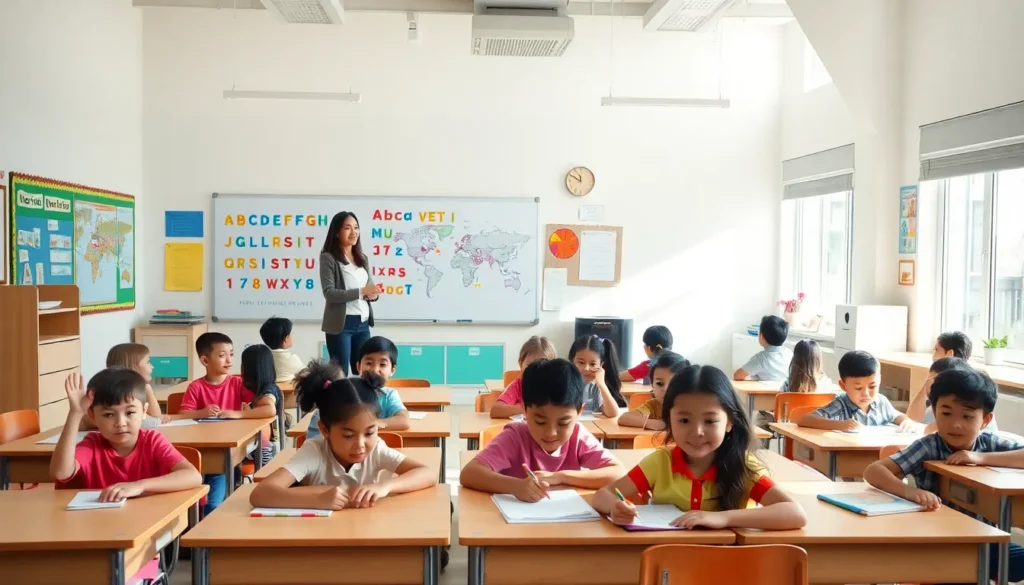

What is elementary years? This question matters to every parent, educator, and caregiver who wants to understand childhood education. The elementary years represent a foundational stage in a child’s academic journey. During this period, children develop essential reading, writing, and math skills. They also build social connections and learn how to interact with peers. This guide explains everything about the elementary years, from age ranges to core subjects and emotional development. Parents will find practical tips for supporting their children through this important phase.
Table of Contents
ToggleKey Takeaways
- The elementary years span kindergarten through fifth grade, covering ages 5 to 11 in most U.S. school districts.
- Core subjects during the elementary years include reading, math, science, and social studies, building essential academic foundations.
- Children develop critical social-emotional skills like making friends, resolving conflicts, and regulating emotions throughout elementary school.
- Establishing consistent routines and staying involved at school significantly supports your child’s success during the elementary years.
- Reading daily with your child and creating a dedicated learning space at home reinforces classroom learning.
- Social-emotional learning (SEL) programs in elementary schools improve both behavior and academic performance.
Defining the Elementary Years
The elementary years refer to the first formal stage of education in the United States. This period follows preschool or kindergarten and comes before middle school. Schools often call this stage “elementary school” or “primary school.”
During the elementary years, children receive instruction in basic academic subjects. They learn to read independently, solve math problems, and write complete sentences and paragraphs. Teachers introduce science and social studies concepts at age-appropriate levels.
The elementary years also focus on building good learning habits. Students learn how to follow directions, complete assignments, and work in groups. These skills prepare them for more advanced coursework in later grades.
Most elementary schools operate on a traditional schedule with one main teacher per classroom. This structure helps young students feel secure and build strong relationships with their instructor. Some schools use specialist teachers for subjects like art, music, and physical education.
Age Range and Grade Levels
The elementary years typically include children between ages 5 and 11. This stage covers kindergarten through fifth grade in most U.S. school districts. Some districts extend elementary school through sixth grade, while others end at fourth grade.
Here’s a general breakdown of ages and grades during the elementary years:
- Kindergarten: Ages 5-6
- First Grade: Ages 6-7
- Second Grade: Ages 7-8
- Third Grade: Ages 8-9
- Fourth Grade: Ages 9-10
- Fifth Grade: Ages 10-11
Children enter kindergarten at age 5 in most states. Birthday cutoff dates vary by state and district. Some parents choose to delay kindergarten entry for children with late birthdays, a practice called “redshirting.”
The elementary years span approximately six to seven years of a child’s life. This makes it one of the longest continuous stages in formal education. Students spend more time in elementary school than in middle school or high school.
Core Subjects and Skills Developed
Students in the elementary years study several core subjects. Reading and language arts receive the most instructional time. Children progress from learning letter sounds to reading chapter books independently.
Reading and Language Arts
The elementary years build a strong literacy foundation. Students learn phonics, vocabulary, comprehension strategies, and fluency. Writing instruction covers handwriting, spelling, grammar, and composition. By fifth grade, students write multi-paragraph essays and research reports.
Mathematics
Math instruction during the elementary years covers addition, subtraction, multiplication, and division. Students also learn fractions, decimals, and basic geometry. Problem-solving skills grow as children tackle word problems and real-world applications.
Science and Social Studies
Science lessons introduce life science, earth science, and physical science concepts. Children conduct simple experiments and learn the scientific method. Social studies covers history, geography, civics, and economics at a basic level.
Additional Subjects
Most elementary schools include art, music, and physical education. These subjects support creativity, coordination, and overall development. Many schools also teach computer skills and digital literacy during the elementary years.
Critical thinking develops across all subjects. Students learn to ask questions, analyze information, and draw conclusions. These skills become increasingly important as children progress through school.
Social and Emotional Growth During Elementary School
The elementary years mark significant social and emotional development. Children learn to make friends, resolve conflicts, and work cooperatively. They develop empathy and begin to understand different perspectives.
Friendships become more important during the elementary years. Children move from parallel play to genuine collaborative relationships. They learn to share, take turns, and compromise. Best friendships often form during this stage.
Emotional regulation improves throughout the elementary years. Younger students may have frequent emotional outbursts. By fourth and fifth grade, most children manage their feelings more effectively. They learn coping strategies for frustration, disappointment, and anxiety.
Self-concept develops during elementary school. Children form opinions about their abilities and worth. Positive experiences build confidence, while repeated failures can damage self-esteem. Teachers and parents play key roles in fostering healthy self-image.
Many elementary schools now include social-emotional learning (SEL) programs. These curricula teach self-awareness, relationship skills, and responsible decision-making. Research shows SEL programs improve both behavior and academic performance.
How to Support Your Child Through the Elementary Years
Parents can take several steps to support children during the elementary years. Active involvement makes a real difference in academic success and emotional well-being.
Establish Routines
Consistent daily routines help elementary students thrive. Set regular times for assignments, meals, and bedtime. Children feel more secure when they know what to expect. Morning routines reduce stress and prevent rushed departures.
Stay Involved at School
Attend parent-teacher conferences and school events. Volunteer in the classroom when possible. Read school newsletters and check online portals regularly. Teachers appreciate parents who stay informed and engaged.
Create a Learning Environment at Home
Designate a quiet space for assignments and reading. Keep books, art supplies, and educational materials accessible. Limit screen time and encourage hands-on activities. Read with your child daily, even after they can read independently.
Communicate Openly
Ask specific questions about your child’s day. “What made you laugh today?” works better than “How was school?” Listen without judgment when problems arise. Help children solve conflicts rather than solving problems for them.
Support Social Development
Arrange playdates and encourage extracurricular activities. Help children practice social skills at home. Role-play difficult situations like making new friends or handling disagreements. Celebrate kindness and good friendship behaviors.
The elementary years pass quickly. Parents who invest time and attention during this stage set their children up for future success.